Thursday, September 4

Carfree Mt St Helens


The Mt St Helens trip was truly amazing. This was the first time I had ever planned
to cycle most of the way from Portland to Mt St Helens. The distance of 70 miles doesn't seem impossible until you figure that our destination was at 2700 ft. Team hardcore left southeast Portland Friday afternoon on our fully loaded ATBs (all terain bicycles) and followed an awesome route through east Vancouver on low-traffic streets. We wound our way through the beautiful suburban blacktop towards farm country. The highlight was definately Padden Parkway.
By the time we left Padden for the rural lands, the golden hour had approached and the scenery was simply stunning. When we finally reached the road which John's parents lived on, it was a wonderful precurser, as the road was very small and we saw no cars.
The next morning Jim and Joyce arrived and so the four of us squeezed into Jim's pickup for a short lift to Cougar.
It was a grand adventure to climb to the foothills of Mt St Helens. We enjoyed amazing viewsof the awesome landscape. There is so much more depth and meaning to the experience of cycling somewhere. We passed through deep woods, a few fields of clearcut, and decreasing traffic before we finally arrived at Marble Mtn Snow Park. We took a long rest and ventured on to the welcome quiet of a completely care-free road. We passed bicyclists and hikers casually meandering down the middle of the street. Obviously nobody was concerned for their safety as there was nothing to be afraid of. The closure not only brought peace to the area, but it also forced the outdoorspeople to travel by their own power down the road.
Our camping area was the middle of a hiking trail which we expected to be unused. We met up with Sugata and we enjoyed the stunning environment of a land minimally touched by humanity. The quilt of a trillion pinpoints of light brought such joy to us that we actually walked back to the road and lay there drinking in the rare experience for dozens of minutes.

The next day we packed up for the far end of the road at Lava Canyon. The road was beyond description in it's splendor. A corridor through thick evergreens surrendured grudgingly to steep sloped canyons formed by the eruption.
The trees reappeared just before we finally reaching Lava Canyon. After a peaceful lunch we explored the gorgeous lookout points to the crystal clear aqua river. The thunderous roar of the river was a marvelous counterpoint to the city's more common roar of traffic.
For someone like myself who doesn't have the ability to just drive out 200 miles from a city, it was a deeply moving experience to be far enough out that the only sounds dancing on my eardrums was the rush of the far away rivers and the swaying of the tree branches.
Then we jumped on the idea of riding down the road back to Marble Mountain. This venture was overwhelmingly worth it as three of us sped down the pitch black road with no fear of automobiles or traffic of any sort. It filled me with longing that more people could experience the public spaces of our world without fear as we did this weekend.
The next morning I woke up before dawn to enjoy the last experience of watching the sun rise on the volcano's slope (it would be saddening and depressing to come back here when the noise and fear of autos pervade the environment).
I was thrilled to see the sky as boundless as the landscape as I stood in the shadow of the mountain peak. The deep crimson sky gradually succumbed to a rich copper as the distant sun's rays leaped over the atmosphere and danced on the peak.
Our morning was peaceful and we shared company with the birds and chipmunks in the area.
Finally we went to June Lake on the way back. Our ride was just as thrilling as it had been every other time. My joy in this quiet environment will forever be a happy memory of peace.
All in all the trip was an unforgetable experience and I will cherish it forever. Though I had always thought that St Helens was a destination which would be unreachable for me unless I could convince someone to drive me out there, it's now clear that with proper planning this area is reachable by bike in less than 2 days.
(read the full photo journal)

Sunday, April 13


While visiting Todd Litman, creator of the Vancouver Transportation Policy Institute, I learned that the BC Ministry of Transportation, Saanich, and the city of Victoria are developing a plan to install a bus rapid transit (BRT) system through downtown and along the Saanich Peninsula(1). A BRT system is a transportation option which is an intermediary step between the traditional bus system currently in place throughout North America and a full scale light rail system. Essentially the system consists of an exclusive median in which the buses run with stations located at specific intervals, and passengers buy their tickets ahead of time at the station(2). BRT systems offer the same freedom from traffic and congestion at a lower cost. The advantages of the system is that it creates the same degree of permanence that light rail has which stimulates economic development, enhances street life, and adds destinction to an otherwise mundane bus system. The disadvantages are the potential pollution depending on the propulsion system, and the poor public image that continues to haunt buses. Systems have been built in about 18 cities throughout the United States as well as many countries in South America. For most cities, the BRT systems have reduced congestion and improved the perception of public transportation.
Tonight's public hearing was the most contentious public forum that I've attended (3). According to some people at the meeting, this was the first time that the Transit Authority had offered the opportunity for any kind public testimony. This alone set off a wave of distrust among most business owners and a few residents. The first speakers including one from the downtown Residents Association were generally in favor of the project as a way to 'get people out of their cars' one disabled resident expressed concerns about the pollution that buses have thus-far produced. [CNG, electric, or hybrid powered bus would be necessary to resolve this]
Darren Marr of GVCC expressed the cycling community's views as mostly favorable. He spoke highly of the decision to keep bike lanes from being sandwiched between buses and auto traffic, the increased distance that bike lanes would travel, and increased space for bikes. However he expressed concern about the outlying areas where buses would travel on the curbs and possibly cause danger to cyclists.
The Association of Douglas Street businesses expressed their opposition along a very different tangent. Their main opposition stemmed from the elimination of left-turn lanes, the addition of
four traffic signals, and reduced parking (4). The association expressed frustration that BC Transit had "ignored" options such as running buses along the curbway or simply installing high
occupancy vehicle (HOV) lanes. The association stated that the reduced [automobile] access would kill business because customers would find it difficult to get to their doors [by car].
The association's concerns are real and their opinions are legitimate. However they make one very massive assumption, which is that people who drive will actually follow the rules. If this
assumption were true, than the suggested alternatives would be just as logical. Unfortunately from drivers putting toys in the passenger seat (to ride in HOV lanes), to parked cars
interfering with transit lanes
there has been a long tradition in North America of nonchalance to traffic laws.

It is this fear of imperfect drivers as well as the potential to reduce pollution which
most impassions the pedestrian community to support the BRT system. Of those people I spoke to while riding the bus later that week, people were in favor of the proposal primarily for it's
potential to make walking in Victoria a safer experience.

Monday, January 21

Bike Friendly Los Angeles


The city of Angels has always been considered the iconic automotive city. Not only have they built an entire statue dedicated to traffic, but Jane H. Kay commented on a person who was stopped by the police simply for walking down the sidewalk next to Disneyland.

However despite the negative stereotype that Los Angeles has, there are many bike and transit friendly aspects to the city. The most dramatic example of bike friendly LA is a 21 mile bike path stretching from the edge of Malibu to Redondo Beach. This is where I first got into long distance cycling as a teenager. Although many roads in LA are wide multi-lane arterials, most of the major roads have bike lanes, which makes for a much simpler ride in places like Orange County. I had very little trouble getting through the sprawling suburbs east of Los Angeles because I always had a bike lane. The other positive aspect to cycling in LA is that most of the roads actually connect. So unlike the outer suburbs of many cities (including Portland), I was able to ride from Redondo Beach all the way to Wilmington on low-traffic roads. This is very helpful for people who don't feel comfortable using bike lanes with fast traffic. The only difficulty I had as a teenager was trying to get far enough out of the city that you could experience nature. If you do want to experience a natural setting in LA, the most bike-friendly places are:
Palos Verdes- while very built-up, many areas on the coastline are still beautiful. Ride Palos Verdes Blvd from Torrance up into the hills and ride counter-clockwise around the penninsula. The south side of the peninsula is the most scenic with amazing coastline vistas.
Malibu- the east side of Malibu is very hollywoodish, but if you remain patient and continue along Pacific Coast Hwy towards Point Magu you will see incredible views of the shoreline and watch the power of the ocean as it plays back and forth against the rocks.
West Whittier- if you're up for a longer trip you can take a ride up the San Gabriel bike path.which stretches all the way from Long Beach to West Covina. This path is basically a bicycle freeway in that it's fast and direct with very little scenery since the rivers have been transformed into concrete culverts. However there is one very enjoyable section between West Whittier and El Monte at the Whittier Narrows dam. This park has some wonderful trails through it and offers a break from the endless concrete throughout the rest of the city. If you take this trial, you can also stop at the Whittier Narrows Recreational area just west of the dam.
If you don't have a bike while your down there, simply take the light rail system to Long Beach and visit the BikeStation. Modeled after the Seattle BikeStation, this collective offers storage, rental, tool use, and advice for safe cycling around the Los Angeles area.
LA has been spending the past decade building and improving it's mass-transit system. There is now a multi-tiered light rail system connecting Long Beach, Oxnard, and Covina with downtown LA as well as a high-speed bus line running along the Harbor Freeway. I even got to see articulated buses running through Santa Monica. Unlike the situation when I was a teenager, the buses all have bike racks to allow you to use multiple options to get around the city. How successful this system becomes depends on how open-minded the population is. However there are many signs of intelligent lifestyle ideas throughout the urban metropolis that is Los Angeles.

Sunday, November 25

Pedal Powered Car -artwork

I was impressed and intruiged when I saw this post about a pedal-powered car. Instead of some four wheel bicycle, there was an old Buick. As I read on, the post revealed that Michel de Broin had, in fact, removed the engine and guts of an old car and created a bicycle drivetrain to power the vehicle. If art is meant to intrigue and create discussion, than this piece has definately done it's job. I was left looking at it and rethinking my ideas of what is a car and what is a bicycle. Despite the latin root of the word 'bicycle' as being two-wheel, most human powered vehicles are described as 'three-wheel bicycle' or such. However this isn't simply a four wheeled bicycle, it's a human powered car. So Michel has in fact rewritten our definition of car and bicycle.
Of course the Toronto authorities did apparently look upon revolutionary transportation with the same predictable malice that other western governments do. Namely by searching for some means of squelching it.
The irony of course, is that they're charge was 'operating an unsafe vehicle.' What is so amazing is that with proper brakes (which I'm told were maintained), an automobile traveling at 15mph is 5 times less dangerous than an equally sized vehicle traveling at 30mph(1).
I do hope that innovations like this reach many more eyes and ears, if for no other reason than to make us think.

Wednesday, August 29

The Ride for Climate

David Kroodsma is cycling across America to talk about Global Warming and how this affects us. After first riding the STP through the Pacific Northwest, he became fascinated with bike touring and soon rode his touring bike from California through Mexico and Central America to the southern tip of South America. The experience taught him (and us as well) about how Global Warming is affecting us now and in the future. A few things that were interesting were how little most people know about climate change. Many South Americans thought that it had something to do with Ozone. However most everyone he spoke with understood that it's happening and that it's caused by human activity. The people he spoke with in America held starkly different beliefs. Interestingly, all of South America create 5% of the world's carbon emmissions, while in the U.S. causes 20-25%. David's comment on this was that it's much harder to accept bad news when you are the cause of it. (which is why bike commuting is so important)
The other interesting trend that he noticed was that many people who were extremely poor (the income disparity is much larger in Latin America than here) still had television sets and would dream about the American way of life. Of course if they all had our lifestyle we would need 6 Earths to support it.
But you're interested in the bike aspect.
So David cycled all the way through Baja California and crossed to Mexico. Unlike many cyclists, he detoured into the cities and talked with lots of folks in the cities. Some cities (like Los Angeles and Mexico City) were heavily choked with traffic, while others (like Bogota were wonderful).
David talked at schools, churches, and on the local news. He crossed the Andes mountains twice (that's an elevation of 16,000 ft. At times he climbed 5000 ft in a single day. The elevation was challenging. Another area in the mountains David's map showed a road going through, but it hadn't been built yet. So the only option was dismantling his bike and traveling by Burro across the peaks.
Many people ask if this is difficult, but for David it wasn't so much how difficult it was, but how simple. All of the people that he met were friendly and generous with food and hospitality.

After riding through all of South America, David flew back to the U.S. and
traveled across the country with companion Bill Bradlee to speak to Americans about Global Warming.
David's extensive travels certainly paid off in endurance. While cycling with him down the Springwater Corrridor, it was incredible to see him averaging 18mph down the trail with a fully loaded bike with the rest of us struggling to keep up. David mentioned that after cycling through the Andes, riding through the U.S. was like swimming in oxygen.
Visit David's website and blog here to learn more about his adventures and speaking events.

Monday, July 16

Seattle To Portland

For those of you who are interested in my (mis)adventures at this year's Seattle-To-Portland ride, I'm sending out this post of what NOT to do on a 200 mile bike ride.
The bus ride was probably the best part of the trip, given that my tardiness allowed me to get nearly the whole bus to myself. I stowed my recumbent in the luggage bin and had everything in one place when I arrived. I set up the bent and trailer with my sign.
There were some issues with the idler pulley, so I stopped at a bike shop and hardware store for some specialty items. Then assurred that the bike would be dependable, I headed off for dinner and to meet my hosts in Seattle.
After finally resolving the bike, I then had the misfortune to get lost in one of the very hilly sections near Lake Washington (there are many). So after struggling with a recumbent and trailer up several 7% grades, I arrived very exhausted at their house. I had connected with this very wonderful couple during pedalpalooza, and asked if they would be willing to let me stay with them for STP. Dick and Mina were very kind and gracious given all of the stuff I had to deal with before getting there. I figured that this would be the easiest way to be near the start point. I had very much enjoyed talking with them about their farflung adventures around the world. They've had an envious lifestyle.
My first mistake, was to be less cautious about the distance from Dick's house to the U of W. By the time I got to the starting point, I'd already covered 7 miles. I finally got my start packet, and raced off with the last of the starting riders. I managed to keep a strong pace and finally caught the rearmost pack of riders in the exurbs of Seattle. I got the first 40 miles done by 11:30 which was still mediocre for me.
It was much more fun when I finally had some other folks to ride with and didn't have to contend with traffic alone. As soon as I reached the first large crowd, I new that my decision to bring the sign was not in vane. Many people saw it, and either avoided conversation (meaning guilt) or appreciated it. Many people thanked me for bringing it. I passed a lot of the same people and had many brief hellos and conversations, but few real connections. The one major highlight of this portion was the unbelievable sky. I enjoyed amazing views of Mt. Ranier capped by amazing cumulous clouds (If I'd had my camera, the ride would have probably taken another hour). Many of the same wonderful farm country greeted me again and I marveled at the vast swaying grasses of the farms. I caught up with Jess & Kronda a few times on the ride, which was amazing. The most incredible part of the ride of course, was the Tenino trail. This path is the main part of the route that I look forward to.
As the day continued to wain, I became nervous about my finish time and I was disapointed that I was making less than 10mph. I later found that this was a combination of being unused to the recumbent for long riding, and the trailer which acted as a drag brake in high winds.
I connected with one rider on the trail who was going slow due to some stomach discomfort. I stopped with him for a bit and we chatted while he recovered. Since I was worried about arriving before dark at this point, I had to leave before he did, so I just let the organizers know that he was there.
I continued on along the trail and despite my fatigue, I relished in the experience of floating through a green tunnel that stretched to the horizon. The sun mildly filtered through the leaves, and the car noise was mitigated by the brush. I returned to the road, and headed towards Centralia with thoughts of nothing but laying horizontal for an hour.
Though I didn't catch Erin, Matt, or *. But I did see Maria and it was great to have someone to chat with at the end. I also talked to a few other people and had some great conversations. After an ice cream, I lurched over to the massage area to find that they were not taking anymore. Then I went to dinner to find that it was meat lasagna. Since I'd had such a hard and disappointing day, I just ate what I could of this. I was simply too tired to care.
It was great to have time to chat with Maria and a few others for dinner, and then I crashed for the night.
I left the next morning and headed to Chahelis for breakfast so as to get some miles before eating. I chatted with Keith Blackwell who is working on extending this trail south from Tenino to Chehalis (just like the Boring folks are doing in Clackamas). This was very exciting and I told him that I'd refer him to some folks. It was really great to catch Matt and Erin during breakfast (boy I'm sad Erin's leaving). I had some pancakes and eggs, before running off to start the next day. The second day is also very wonderful for the first half. In fact it's the middle 100 miles which really make the trip worthwhile. The first 40 miles out of Seattle and the last 50 miles in Portland are both high traffic and noisy. But that being said, I really love going through Toledo, Vader, and many of the towns in the area. In Vader I caught up with a really fun guy who had the same bike I did, and he had some outrageous jokes. We rode along at the same pace for awhile and so had plenty of good-natured bantering. I wonder what he thought of my sign since his support vehicle was a full-sized van.
Anyway at the next rest stop after that I started with more sunscreen and water since the heat was getting oppressive. I also met up with Aimee who would normally have been about the same pace as me (without the trailer) and we talked at the next few rest stops. We also seemed to have a great camaraderie.
Shortly after lunch I left the ride and traveled south from Kelso to see what the Washington route would look like. I remembered how unpleasant the ride over the L&C bridge and Hwy 30 was, so I decided to leave the official STP route, and the helpful markers and make my own way.
For the first 40 miles or so it was great. I traveled south on only two-lane roads and kept pretty well on the route. I got plenty of gaterade and food due to the heat. However it was near Kalama that I made a fatal mistake. I took the wrong section of Green Mtn. Road which climbed about 2000 feet through only a couple of miles. For a recumbent rider who's riden 160 miles already, this was an unbelievable test of will (and of Aaron). I did persevere, but with a huge time loss. Finally I managed to get back to Old Pacific Hwy and stopped at a great farmstand on 279th. The woman who ran it was a former cyclist and knew all the hills and routes.
I got 4 pints of fruit to re-energize, and got some advice for routes. However after looking more closely at my map, I decided that I-5 would be shorter and flatter. This was a great decision since the traffic practically pushed me into Vancouver. I made 6 miles in about 1/2 hour. I also found someone's cellphone on the shoulder who was very grateful that a cyclist had traveled on I-5.
Unfortunately since Vancouver has nowhere near the transit system that Portland does, there were no buses running at 7:30 on a Sunday, but after continuing to downtown Vancouver, I caught the Trimet bus back to Portland. And yes I did eventually get to the finish line.
Total miles - 207

Thursday, June 28

How to 'Get Hitched' with your Bicycle


Demand for bicycle trailers continues to grow, enough that people are just building their own rather than trying to find an inexpensive solution at a store.
From speaking with numerous people and using several different types of trailers I have learned quite a bit about what makes a successful one. First of all I recommend using a two-wheeled design because of it's stability and safety. The frame should be strong enough to comfortably enclose the wheels without any part of the structure coming close enough to be in contact with the rotating wheels. A square frame with rounded corners provides the most stable platform and minimal chance of scratching you or anything else. That's the easy part. More complicated is the hitch system. The hitch must allow all three axis of rotation. Since the bike must be able to lean side to side, turn on corners, and bend over steep hills and driveways. The most ideal location for a bicycle hitch is to connect as close to the rear axle as possible. This puts the force of the load directly in line with the wheels. For light loads of 30-90blbs (12-40kgs) it's best to connect to the bike in this manner. There are several commercial trailers which use a simple and cheap pneumatic coupler. This is an easy universal joint which you can find at most hardware stores. Simply screw or bolt it to a couple of metal plates and attach those to the bike near the rear axle. Here's a nicely designed lightweight hitch. For slightly heavier loads of approximately human weight, the coupler may not be strong enough. A good solution is a rod end, which is a ball & socket joint (1). You can get several different sizes so pick one which will be plenty strong. The only disadvantages to attaching at the wheel are the complexity, and the difficulty of keeping it away from the rear tire on turns. That's why for heavier loads of several hundred pounds or 150 kg. I recommend attaching to the seatpost. It's a little less safe in quick stops, but if you're carrying 300 lbs on your bicycle, than you should definately be a careful and experienced rider.
The fastest way to do this is to take two metal tubes (large enough to fit over your seatpost) and weld them at a 90 degree angle Slide one end over the seat tube, and drill a large hole perpendicular to the tube sticking out. Through this you can put a bolt and run your trailer tube from it (3). A more complex but very durable alternative, is to buy a windsail joint (not that kind of joint). This is a neoprene connection between the board and the windsail. A used one is cheap and provides a weatherproof joint (4).
I don't have much authority on metal connections, but from those poeple that I've talked to, welded connections are more homogenious than bolted. In other words the whole frame acts as one unit, and joints don't loosen. However since I don't know how to weld, I built a full trailer using self tapping screws. If you do use regular bolts, be sure to put lock washers or neoprene bolts on every one to prevent the bolts from loosening.
For more information on trailer design and use, visit bikes-at-work.

Thursday, May 31

The Village Building Convergence


To write even a brief summary of the whole Village Building Convergence would be doing an injustice to the overwhelmingly broad experience. Therefore I will just post a few highlights of the event and invite you to visit the website to learn more.
I was privilaged to play a small part in the event this year. I spent several days before the celebration helping to setup and construct the space. There were walls to be built and painted, decorations to hang, and materials to be setup. I learned a lot about construction in this process.
The day before opening, we set up mocktails on the Burnside Bridge as a way to intice volunteers to explore the space and also to share my appreciation of folks who use community transportation (more on that later).
On Friday VBC opened to an awesome crowd, delicious food, amazing speakers, and great entertainment. There was a group there called the Sustainable Road Show which used a puppet theatre to share with people the realities of transportation and GMO based biodiesels. They encouraged people to travel by bike or at least use algae or other renewable biodiesel. I was impressed at the positive response they claim to be recieving in middle-America. This is very good news.
I also had the chance to participate in the Sunnyside intersection repair. When I say repair, I mean taking steps to mitigate the damage that standard transportation does to neighborhood connectivity. The intersection repairs were the primary sites where children could happily run around and play without being within an enclosure. It was so great to see.
On the first Sunday we took a bike tour of the close-in sites to give people an idea of where they might want to volunteer their time. Unfortunately due to the rain, and the plethora of workshops, we only saw about 4-5 sites before heading to a bio-swale workshop. It was quite interesting and I was able to share many of Portland's finest road experiences.
During the week there were so many amazing things to experience including a workshop on rocket stoves, and several great speakers.
Thanks to some fast action by one of the organizers, I was able to set up bike parking so the attendees were able to have a safe place to leave their bike during the evening events.
On the final weekend, I helped work on a cob building, and also worked on an intersection repair.
The last Sunday we held another bicycle tour of the close-in sites. Thanks to Deepak we covered 15 sites and the folks really enjoyed the experience. Ironically enough, there were a few car-dependant folks who wanted my help in giving them our route so they could drive along. I had to inform them that I specifically worked out a route which is difficult or impossible to drive along so that the group would be safe. What many folks don't realize is that the main reason that events like this exist, is becuase there is minimal connection within neighborhoods due to the unpleasant pedestrian experience. When a neighborhood is more difficult to drive through, it becomes more pedestrian friendly and there exists more human connectivity. This is the whole reason why I have aligned myself with the Village Building Convergence this year.
I welcome you to find out more about City Repair's projects and successes.

Sunday, April 15

Step It Up - Cutting Carbon Emissions


Yesterday about 25 wonderful folks came down to People's Coop to join the Step It Up bicycle tour. Some people came from as far away as West Linn and Vancouver. The ride was sponsered by Exchange Cycle Tours and showcased examples of how individuals can become more energy efficient and reduce the impact that each of us has on Global Climate change. We started at Peoples where we learned a little about each other and what role bicycle transportation has on ecological respect.
After this Sarah talked to us about People's Coop, what it is, and how the building contributes to the health of the city. We learned about the building's rainwater catchment system, recycled materials, the cob wall, and the passive heating system. Sara shared the advantages of being a part of a community store like Peoples.
We then rode through Ladds Addition which is a neighborhood designed to reduce automobile speeds and foster a bike & pedestrian friendly environment. We continued to Northeast Portland where we met up with Brian Bacon and learned about the green features of his residence. The house has 1200 square feet of windows on the south side which heats up the concrete floor and keeps the house at a warm temperature. He shared the effort he went through to use recycled materials throughout the house. The driveway is used for a garden rather than for an automobile, and the highly insulated walls keep the heat where it's supposed to be. After a brief tour of this wonderful house, we were off again to the west side where we stopped at the EcoTrust Building and met Jen Marlow. Jen had set up a large canvas and some non-toxic paints for us to paint our wheels and create a mural of bike tracks. This was hugely fun and we created a truly wonderful painting. From there it was off to the finale at the Step It Up rally downtown. The irony was palpable that we arrived just as a woman was paying the meter for her car. However we put 20 bikes in the parking space behind her and caught Eric Sten talking about improving Portland's environmental status through energy efficiency and sensible transportation. There were so many incredible people and innovative ideas floating around. I feel that we really made an impact and raised awareness for ways in which people can be the change they want to see.

Thursday, April 5

Sellwood Bridge update


Last night I attended the 4th in a series of meetings on the Sellwood Bridge design. As I covered in a previous post, the Sellwood Bridge project will offer several options for users of the bridge to bring their comments to the county. Unlike other transportation improvements, there is a lot to be thankful for on this project. First of all, since the leading agency is Multnomah County and not ODOT, we can be sure that intelligent transportation modes will be fully accomodated. Mia Birk is on board as an advisor and her comments are well respected by the committee. Secondly there is a very strong interest by residents to ensure that bike/ped transportation as well as transit are comfortable and efficient. The current estimates are that bike traffic across the bridge will be 10 times higher by 2030. This shows a great willingness to respect us as users.
The main focus of the meeting was to hear input regarding the bridge's cross-section, and how the crossing would be routed. Residents had a great many comments and there was some very heated discussion. While Ian was giving his presentation, several outspoken residents started making comments which were requested to be afterwards. Control was almost lost when a number of attendees started shouting out comments and questions. Some of the questions were not even about the bridge itself, but about Tacoma and it's traffic. I was impressed with how well Ian kept his cool and calmly got everyone to follow the public input process.
I feel comfortable with the results that we will be getting from this effort. There are a lot of good people involved, and Multnomah appears to have it's priorities well setup. I only hope that the bridge will be completed before material and construction costs spiral up beyond the range of accessability.
If you haven't filled out the survey, be sure to put your input to the city to support intelligent solutions.

Sunday, February 11

Velo Mobile


Today I met up with Mitch
Schultz
who is the first velomobile owner in Portland. So what is a velomobile,
and how is it different from what we drive everyday?
"A velomobile is a fully enclosed recumbent (usually a trike) that is
designed for use in all weather. Despite their sleek looks, they are not racing
machines. They are quite fast on level ground and some velomobiles have won
in European HPV races but most designs put a premium on practicality."


The Go-One is built in Germany and comes fully assembled. This fascinating vehicle has most of the advantages of a car, while holding on to most of the advantages of a bicycle. I like what the marketing folks say on their website.
"What other vehicle can you "recharge" with an energy drink and
a powerbar." (Of course in Portaland, we use pastries)

Mitch can ride this to Hillsboro everyday without contributing to the traffic
and pollution of others on Hwy 26, yet he stays comfortably enclosed within the
carbon fiber shell. The velomobile weighs in at only 40kg. (75lbs.) which is amazing
for such a trike. It sports a headlight, turn signals, and a lithium-ion power-assist.
While the $11,000 price may be out of the range of many cyclists. The cost is
comparable to a small car, and the maintanance is dramatically lower. Since most
of the gearing is enclosed, and of course the engine is biological. So for people
who do travel long distances without the choice of waiting until dry weather,
a vehicle like this does have it's usefullness.

Sunday, February 4

Tree Planting -bikeystyle


So as Carl mentioned in his 'revolutions' post, we should all find some way to better ourselves each year. So for New Years, my resolution was to go beyond my small little bikey world, and be active in other ecologically fulfilling communities. I chose to plant trees this year as a statement of compassion. Of course in order to avoid hypocracy, I rode my bike over to the Friends of Trees planting event. I also brought along my trailer in case there was a need for tree hauling capacity. Needless to say I made quite an impression on the tree planting group. In fact I was mentioned in front of Mayor Potter for having offered to haul trees with my bike trailer. Then I was photographed by PGE's photographer, and finally I got about three trees over to the planting spots (it felt meager, but of course the trees weighed 80-100 lbs). I had a great time contributing to the beauty of my city and sharing with neighbors. I also learned a great deal from Steve who has planted dozens of trees throughout Portland. The homeowners of course were supremely grateful for our efforts (even though we were volunteers, the homeowners do pay for the service). I look forward to working again with Friends of Trees until the season ends in March.

Friday, February 2

Can Powell Ever Be Safe?

There have been several Powell Blvd Streetscape Plan meetings to allow ODOT to
"continue to allow SE Powell Boulevard to serve vehicle traffic movement while also improving the safety, accessibility and the aesthetic environment for pedestrians, cyclists and transit riders." (never mind that this is an oxymoron)
The effort is impressive. PDOT printed out huge maps of the entire stretch from the Ross Island Bridge to the I-205. Not surprisingly, the lions share of the comments were focused on the portion west of 20th. This is most likely because nobody with any choice would dare walk or ride a bike near east Powell. Those few who do are unlikely to be aware of meetings such as this. There were several mentions of creating traffic islands, bike paths on sections of McLaughlin where it crosses Powell, better signals, and more clear crosswalks. There were several comments about making safer connections between Cleveland High School and Powell Park at 26th, and creating access from 26th to 21st behind the park. Many people are similarly unhappy about crossing in the 40s and 50s given the bike crossing at 42nd and the high transit use at 50th. But the single hot button issue was how to deal with Powell and 17th. This area is a no-mans land because the Union Pacific tracks cut off access east-west, and the arterial cuts off access north-south. This completely cuts off Brooklyn from the rest of Portland. One woman I spoke to had spent an hour desperately trying to figure out how to get across. The current proposal is to rebuild the pedestrian passageway alongside Powell so that it sits closer to the road. This is one which I spoke out against because the lack of connections makes it equally unpleasant no matter how high it is above the street. Auto traffic has never been shown to reduce crime. People just drive by when something happens if they see it at all.
The other options for crossing the tracks (such as the pedestrian bridges) are laughable in their accessability. I spoke with several PDOT representatives on this and heard a lot of doubt that Union Pacific would be open to a new crossing. This is because they constantly move trains in and out of the switching yard and they have legitimate safety concerns. I heard one option that a new crossing could be made at the expense of removing a different one. So I proposed sacrificing a grade crossing on Division (there are currently three) if it allowed us to switch it with a crossing at Powell. However the folks at Wednesdays meeting appeared much more willing to talk strongly with Union Pacific. It's simply not acceptable that we should have the equivalent of two highways bisecting southeast Portland.

Monday, January 29

Access through Mt Tabor Park


The Mt Tabor safety committee is working on several issues to improve safe access between 60th and 76th avenues. Among them is the novel idea of creating an 'elevation friendly' path through the south side of Mt Tabor Park. This is an idea that I wish I had thought of, but credit actually goes to John Turner who is an active member of the Mt Tabor community. I had the opportunity to hear some thoughts from him on the proposed path.

In a few words, what first got your attention that there was a need for a new path through Mt Tabor?

Two issues; the number of auto-related deaths in the neighborhood, and my own increasing sensitivity to hills.

First of all, there have been three bicyclists killed on Bellmont. As a cyclist myself, when I looked for a safe route through the neighborhood, I found that there was none. Secondly I was myself hit by a vehicle and this has caused mobility issues for me.

I've seen a few women in the neighborhood pulling kids along with them in trailers, xtracycles, or tag-alongs, and I want them to be able to safely travel to the local schools or to Mt Tabor Park itself.

I realized that for people who are not physically confident, when they come to terrain such as cyclists are forced onto, they're not willing to try it.
On the other hand, many handicapped and less physically strong people head over to the Oaks Bottom Trail to get some outdoor time because it's flat and very accessible.

How would you respond to the people who say that the people who ride a bicycle are strong enough to go over the hill, and there's no need for another path?

As I get older, it's harder for me to get over such hills, so I can sympathize with other people who have a harder time traveling over difficult terrain. Whether they are children, handicapped, elderly, or innexperienced.
Everyone benefits from a comfortable recreational trail.

What groups are you looking to connect with in order to get support for a project like this?

I'm mostly talking with people in the bike community, parents, neighbors and the Mt Tabor neighborhood association. I plan to speak with folks at Warner Pacific College, Glencoe School, Mt Tabor School, and Atkinson School.

Do you have ideas yet about where you are going to look for funding?

I don't. I'm not terribly familiar with all of the different types of funding that is out there. Since we're currently in the exploratory phase on the project, I've kept my focus on garnering support.

What is the greatest challenge or unanswered question that you have about a Mt Tabor path?

The greatest challenge is bringing all the different interests together (property
owners, Warner Pacific, the Parks Dept., dog owners, etc) in order to build a will to get it done.

I still need to connect with more people (such as handicapped folks) and there are many resources there that I am waiting for. Certain interests have to fall into place. At this point we need to build an understanding of the benefits that a path like this has for people of many different interests.

What is your next step now?

I plan to attend a meeting with Warner Pacific College to discuss options for running part of the path on their property. The college is looking at ways to create a stronger connection with the neighborhood, and I believe that this will be an ideal course for both of us.

The meeting is at 6:30pm on February 12th at Kardetzke Hall, 2219 se 68th

Here's a map with car directions. Or you can take the existing path to the college by following this route.

Thursday, January 18

How to Make Streets Safe


Tabor Traffic Safety
The Tabor Traffic Safety group had an interesting meeting today to hear from Bill Ross about how to create successful traffic safety. Bill is the Transportation Chair for the Foster-Powell neighborhood. He was a critical element in creating safer crossings of Foster Road in the 60s blocks.


The Foster Streetscape Plan was set up in 2003 among a group of residents who were embarassed at how meager the pedestrian environment was. They set up to create a solution to the dangerous barrier.
First of all they analyzed and defined what the problem was, namely that pedestrians attempting to cross Foster were terrified. In defining the problem it is also important to understand the whole situation.

  • What type of road is it (arterial, local collector, residential) what uses does it have (freight, emergency, etc)
  • Who uses it (auto, transit, bike, pedestrian)
  • Where is the traffic coming from and where is it going to
In order to do this there are many resources. Find someone who can both provide the information and also help bring the issue to the right ear.

Then it's necessary to look at all safety concerns
  • pedestrian
  • bicycle
  • speeding
  • visibility

The more concerns that are brought to the table, the more potential allies will be interested. Understand that transportation concerns cross neighborhood boundaries. A dangerous road is going to going to have a ripple effect through several towns. Be sure to get contact info for any potential volunteer. Keeping people involved is critical.

With everyone at the table, brainstorm different solutions which will improve the situation. For example physical bariers to speeding are more successful than signs or enforcement.

Look at funding sources. There is money out there, but generally the 'big pools' have been used up. Look for small sources which can fund one aspect of the project. For example if a project will improve a street crossing and it's near a school, than look at funding from pedestrian safety programs, safe routes to school, bike safety programs, and business improvement sources. Get the media on your side to spread the word. Talk to your resources in planning, they can point you to other funding opportunities. Get several people to call about the issue. This has a greater impact than one person.
Keep in mind; it took 50 years for us to get stuck in this mess, it will take a lot of work to get out of it.

Monday, January 8

What is a safe street?

Some people travel by car, some by bus, some by bike, and others walk. All of them have different ideas about what makes a street safe and comfortable.
Most people who are not traveling in large vehicles find that streets which are less wide (such as neighborhood streets) are the safest.

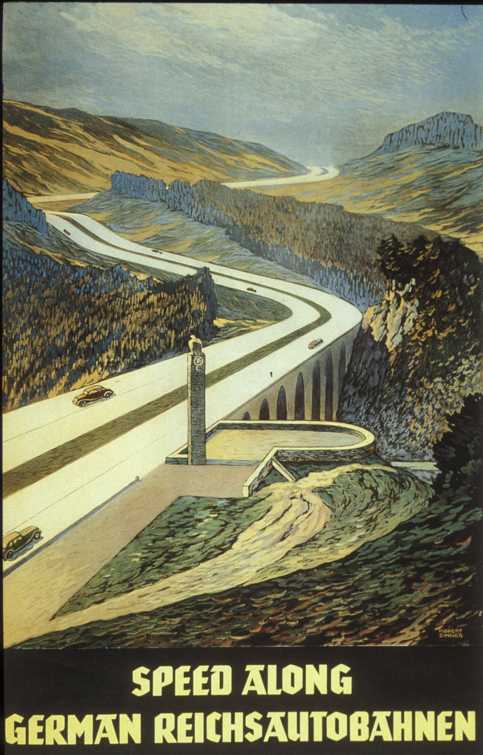
The contradiction is that everyone wants to get to their destination as quickly as possible and with the fewest interruptions. What happens is that urban planners (following the Robert Moses model, which in turn followed the Nazi autobahn) have long been creating straight roadways designed for higher speed and fewer stops. This allows people to go very fast (assuming there are few other people using the road). However by going fast, there is less time to react to emergencies. So a small problem, can result in a fatal crash very quickly.


On the other hand roads built through residential areas are smaller and designed for slower speeds. These roads are exactly what most parents want in order to allow their children to play safely. Unfortunately as traffic backs up on arterials, people feel that it's acceptable to head down these smaller roads to get around traffic. This scares the residents and parents who now are afraid to let the kids play outside.

With roads primarily designed for car travel, there are few places where people feel safe. The main roadway is a throughway for vehicles, the side is a parking area for the same vehicles, and even sidewalks are sometimes used for vehicles.
So what is the solution to this conundrum?
Well the main issue here is space. The more of it there is, the faster people will go and the more will be consumed. (2) So to keep people safe, the throughway for vehicles must be constricted. Some solutions which have been built are diverters, choke points, and islands. This results in a smaller area for cars and thus a reduction in speed. However since these are expensive to build, they are used in only a few places. The other issue is that "any restriction on the boundless use of the auto is political suicide."(1) So what is the best way to build a safer neighborhood?

The answer is neighborhood activism. Getting out in the street, writing letters to both the politicians and the media en masse is the only way to create sympathy for the children, handicapped, and elderly users who are the most compromised.

The other side of the coin is simply to use transportation which is safer for other road users, such as busses, bicycles, and walking. By combining modes, trips can be made in nearly the same time as the standard model.
So be a part of the solution and learn more about creating a positive lifestyle.

Sunday, December 10

Holiday Bike Drive


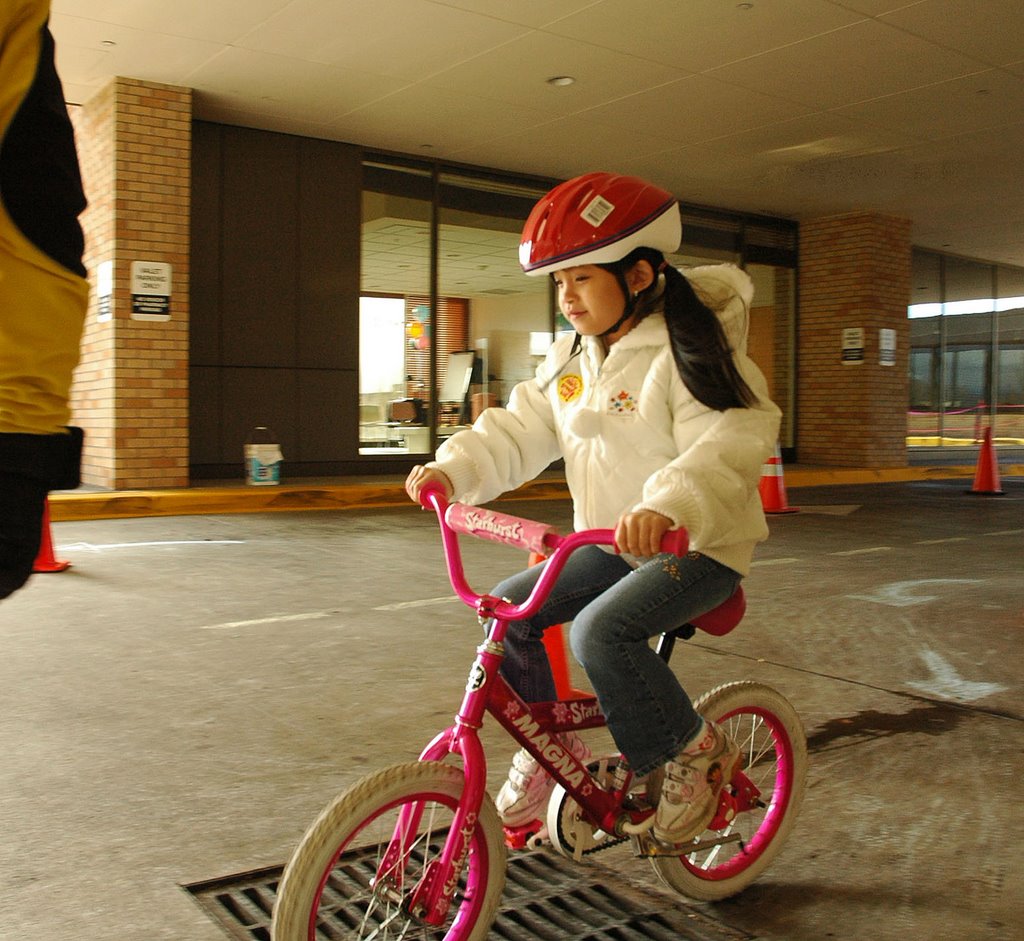
Today I was witness to an amazing feet of innovative community support. The Community Cycling Center runs it's annual Holiday Bike Drive, which gives hundreds of bikes away to low-income children. The CCC (as it's commonly called) is a non-profit organization devoted to helping people who cannot afford a bike to recieve not only a means of transportation, but a full education in safety as well. This year's Bike Drive was no exception in this goal. I was privilaged enough to have a few minutes with Alison Hill, the new director for CCC. She was very proud to talk about the new safety programs at the drive. These courses would ensure that both the children as well as their parents have a basic understanding of how to safely ride their bikes. I believe that it's very important to include parents in these safety classes. Since most parents themselves did not have this opportunity, they get an understanding of what children need to know on the road. Since most of these children, in their excitement to get a bike, may remember only part of what they learn. Mom and Dad, who's primary interest is keeping the young ones safe, can listen and remind the kids how to be safe.
We were all appreciative of Legacy Emanuel Hospital which was kind enough to host this enormous event. They generously gave the use of not only their lobby and a beautiful courtyard, but also the highly valuable driveway. Of course the bike drive was only possible due to the dozens of folks who gave their time and energy to check bikes, teach safety, organize people, and especially the brave men and women who stood outside in 20mph winds teaching kids how to ride and turn and stop.
This drive particularly hit home for me because in my younger years I enjoyed a freedom that most of my friends missed out on. Because I was allowed to travel around on my bicycle, I had the freedom to go anywhere in my neighborhood (and later the whole city) that I wanted to. It touches me on a very personal level when I hear about children who are obese, or who cannot leave their house because 'it's so scary out there.' I feel that children who never develop a sense of independance is at least as frightening.
I wish the CCC great success with their continued work to get Portland's population healthy, active, mobile, and happy.

Tuesday, November 21

Safety Dance

Traffic Calming
As I was heading down 41st to get a bike fixed, I ran into Joe, Ryan, and AmyEllen who were impossible to miss in their bright orange shirts. What these brave folks were doing was calming traffic on this semi-arterial known for speeding. The project was called Safety Dance, and these folks were Dancin in the Street to slow traffic. As I reported earlier, Americans are becoming increasingly frustrated with local governments which show little courage in keeping vehicles from threatening public safety. Folks are taking measures into their own hands in various forms. From Car Free Days, to political advocacy, to actions such as this which temporarilly ensure a safe throughway. I talked with the folks here about what could be done to humanize the street. It becomes difficult because the street is considered sacrosanct by the law. So it is illigal to put a blockage of any kind within the public roadway (of course sidewalks are okay). I suggested to them that one way to do this without a huge amount of work, would be to run a rope across the street and hang a safety banner above the traffic. This would be legal (I think) and effective. For the time being I applaud their efforts to regain control of our public thoroughfares for people.

"You can make a road for people, or you can make a road for cars.
You cannot make both."
Former Mayor Enrique PeƱalosa

Wednesday, November 1

Sellwood Bridge -When Can We Cross?


Recently I attended the first open house for the developing Sellwood Bridge Project. I spoke with several folks there and learned how incredibly complicated the issue is.

First of all the bridge is completely unrepairable. According to Reid Kells (vice president of SMILE), the west approach is barely holding due to shifting soil, the deck is falling through in multiple places, and the main structure is being constantly bandaged. I asked what the chances were of any section of the bridge completely failing before a replacement could be built. I was told the chances were about 50/50.

It was amazing to learn that the Sellwood bridge handles 30,000 vehicles per day (it was designed for 15,000), which is the same amount as the Hawthorne and Broadway Bridges. Given the size of many vehicles today, that averages out to 75,000 tons. (more on this). It should go without saying that if proper bicycle and public transit facilities had been implemented, the weight issue wouldn't be so prominant. According to an ODOT representative, 10,000 bicycles cause the same amount of damage to the roadway as a single motor vehicle.

We all know that the bike path on this bridge is absurdly inadequate. On this the everyone is in agreement. Not only is the sidewalk barely wide enough for pedestrians (much less both modes) but the west access is laughable. Nearly all comments supported more sensible bike/pedestrian space.
Unfortunately as with any transportation improvement project (I mean this in the truest form of the term), the issue comes down to dollars, which is why federal money is being sought to cover the difference. This of course requires a more lengthy development process.

As part of this process, the Sellwood Bridge community (mostly through SMILE) hosted the scoping meeting in order to give and recieve thoughts from the public. I was impressed by the sheer volume of materials that was available (it's still available online). And for public input there were huge boards where we could give our thoughts on different aspects of the river crossing.
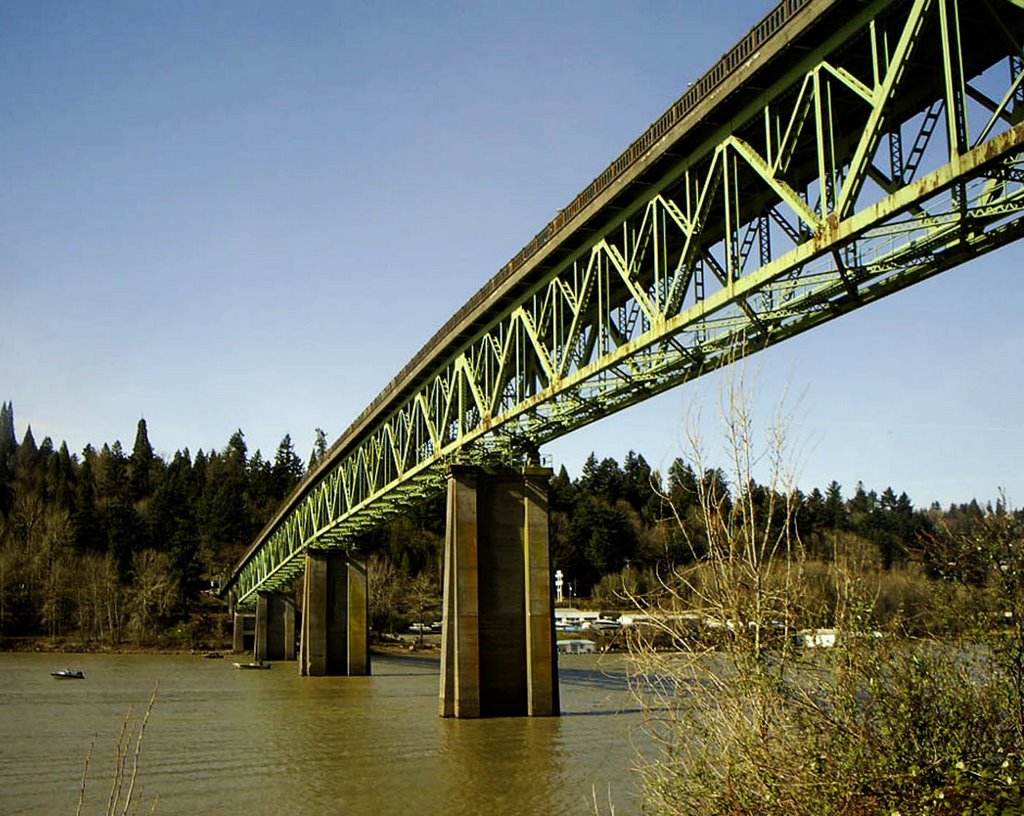
One piece that was freighteningly important is that while the bridge was actually built in 1925, some of the structure had been recycled from the first Burnside Bridge (circa 1894). Since these girders had actually been designed for horse carraiges and trolleys, it's no wonder that they're failing under the load of innumerable SUVs and pickups.

The good news is that both local residents and Portland Metro agree that no more than two lanes are preferred. Metro's recommendations are to replace the Sellwood Bridge as a 2-lane bridge with improved bike/ped facilities. They recommend handling increased traffic via improvements to the Ross Island and I-205 bridges.

The solutions which were most often brought up were a ferry service, and a streetcar on the bridge when it's completed. Both people I talked to, as well as the comment boards rang loudly of support for a ferry service across the river. So far this hasn't been brought up by the city. But enough voices should keep it in the discussion. Although there has been quite a push for bus service across the bridge, I have not heard the city talk about streetcar access (certainly not to the degree that transit and bike facilities are). This is an important option as well which should be promoted.

On the other hand, there is definately a sizeable push for less-humane options. One suggestion on the drawing board is an offramp specifically for the Oaks Bottom facility. I of course brought up the issue of triple convergence regarding that idea. The reason traffic demand is so high there, is because of the vast amount of parking available. If there was bus access and less parking, many people would consider alternatives.

As I spoke with Reid, we came to the understanding that federal dollars would not support a two lane bridge (which would cost only slightly less than a four lane bridge). However the feds are just looking at deck size. So it would be perfectly logical to create a 4-lane bridge design and use two lanes for traffic, one for bike lanes, and another one for a streetcar.
For those of you who use (or would like to be able to use) the Sellwood Bridge, I encourage you to give your opinion so that the planners know exactly what we expect to see in a replacement.

Tuesday, October 24

The Last Warm Bikey Weekend

This weekend was a magnificent break from the oncoming dark winter. I had a wonderful morning on Belmont exploring the pedestrian environment and brainstorming new ways to bring together community.
Then it was on to the Bike School to change a freewheel. While passing there I found out that 7 Corners Cyclery is moving from their historic location on Division. Cory has apparently grabbed space with virtually 3 times the room in a new building near Powell on SE 21st. He's conveniently located a block away from People's coop.
Bike Buddy
Sunday morning I took part in the Bike Buddy program. This program initiated by Southeast Uplift is a wonderful means of connecting experienced bike commuters with people who are interested, but a little intimidated by the idea of using their bicycle as transportation. Elisha joined the program without ever having learned how to ride a bike.
She recieved a bike from co-member Greg who got her through the initial training and was at it like a fish to water. I met with Elisha and listened to her thoughts and concerns. What I initially realized is that most people look at bicycling as scary because the only experience they have is with big scary arterials. thankfully most drivers don't use small feeder roads
So she didn't even know about the very people-friendly roads connecting her to the shopping district. I walked her down one of these and we were completely comfortable in the middle of the street. Now only a couple of weeks later, the two of us rode all the way to Gresham, and stopped in Powell Butte. Even the strong headwinds didn't slow us down. The most important lesson to gain from this is that the mind is fully in control. Nearly every day I hear someone tell me "Oh I could never do that." This is completely true. As long as a person decides that they can't do something, any hope of success vanishes. Elisha on the other hand, decided that she would succeed and therefore success was inevitable. Even crossing large roads like Foster was not a hindrance. I'm thrilled to be part of this program and to share it with others.
(to learn more about the bikebuddy program, you can download a flyer here)
After that short ride, it was time for a more ambitious adventure. I was leading a ride with Exchange Cycle Tours to the outskirts of Northwest Portland. We took an amazing ride through the Rose Garden and then through the suburbs of Beaverton, Hillsboro and Forest Grove. I was thrilled to have been joined by a couple of new women Elizabeth and Sara joined us and both had a great time. They were not only capable of completing a fast 50 mile ride, but they led the pack on the return.

It's great to see more women feeling confident about getting out on a bike. I am a strong advocate in supporting everyone to feel joyous in participating in whatever activity they desire.
Fortunately there are several people working to encourage women to ride safely and happily.
The fall colors and quiet roads made for a perfect climax to the awesome 2006 riding season. I look forward to sharing more wonderful ride experiences with the folks who came on this ride.
Then as if that weren't enough, I found out from Brian that the Ankeny Block party was still going strong with lots of folks connecting and sharing the community. So it was off to SE Ankeny to meet up with Savannah who helped organize the party. If you haven't been to a block party, I strongly recommend it. No words or photographs can describe the experience of standing in the middle of a public street and hearing nothing but the sound of human voices (especially being a block off of Burnside). There were some great people there, good music and food, lots of connections, and amazing artwork. We even had time to brainstorm ideas to keep this momentum going into the winter season. Thanks for biking this weekend, and I hope you will join me for an adventurous winter riding season. :-)